


Sweat, Humidity & Breakouts: How to Prevent Summer Acne Naturally
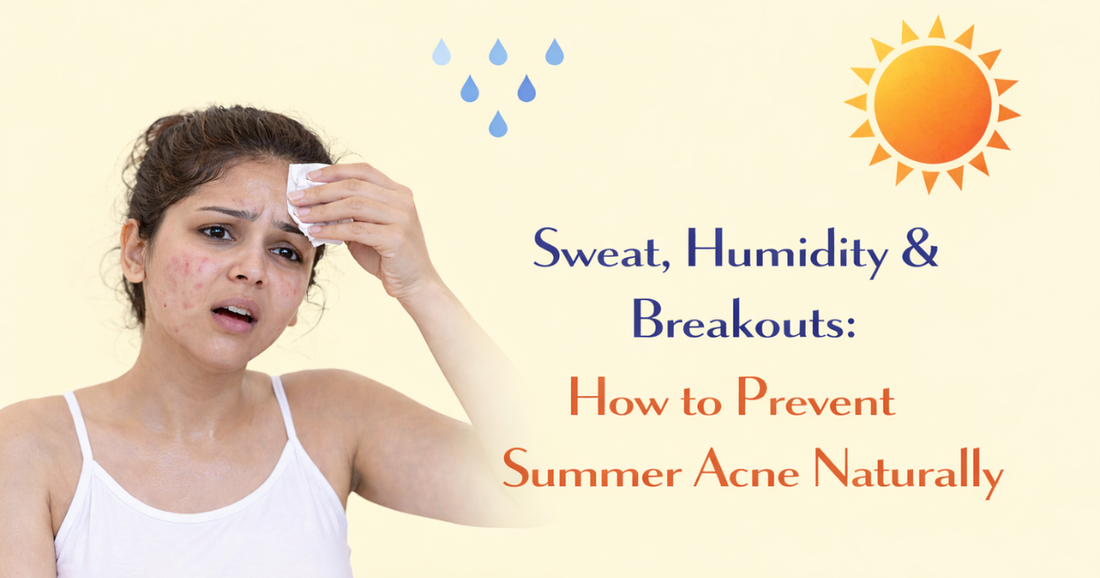
That Summer Glow You Wanted? Your Pores Have Other Plans.
Every year, as the mercury climbs past 38°C and the humidity settles like a warm, invisible blanket over Indian cities, millions of adults find themselves battling the same frustrating phenomenon: their skin goes rogue.
You cleanse faithfully. You moisturize. You try to eat right, and yet, by mid-May, there they are. Tiny, angry, heat-induced breakouts clustering along your jawline, forehead, and yes, even your back and chest.
Summer acne is incredibly common and incredibly misunderstood. Most people believe it's about being "dirty" or not cleansing enough. The reality is far more interesting and far more fixable than that.
This guide is your complete, honest, science-meets-tradition roadmap to understanding why summer triggers breakouts, what your skin is actually asking for, and how to give it exactly that, using ingredients your dadi would recognize and your dermatologist would approve.
Why Does Summer Make Your Skin Break Out?
Before you can fix a problem, you need to understand it. Summer acne isn't just "regular acne" with worse timing. It has distinct triggers that set it apart from the hormonal or stress-related breakouts you might experience at other times of year.
1. Heat Accelerates Sebum Production
Your sebaceous glands are sensitive to temperature. When the weather is hot, your skin produces significantly more sebum (natural oil) as a protective response. While sebum itself is beneficial, it keeps skin moisturized and acts as a barrier; excess sebum mixes with dead skin cells and becomes the perfect recipe for clogged pores.
2. Sweat Is Not the Enemy - But What It Mixes With Is
Sweat, on its own, is actually mildly antibacterial. The problem begins when sweat sits on your skin for extended periods, mixing with surface bacteria, pollution particulates, and residual product buildup. This combination creates a biofilm on your skin's surface that can push bacteria - particularly Cutibacterium acnes (formerly Propionibacterium acnes) - deeper into your pores.
3. Humidity Disrupts Your Skin Barrier
High humidity creates a paradox: your skin feels "moist," but your moisture barrier is actually compromised. Humidity prevents sweat from evaporating properly, keeping your skin in a constant state of mild dampness that weakens the acid mantle, the protective film that keeps bacteria out and hydration in.
4. UV Exposure Worsens Post-Acne Marks
Even if the sun doesn't directly cause your breakouts, it significantly amplifies their aftermath. UV radiation stimulates melanin production in already-inflamed skin, turning minor pimples into stubborn dark spots (post-inflammatory hyperpigmentation or PIH) that can linger for months.
Did You Know? A single pimple left unprotected under the summer sun can leave a dark spot that takes 3–6 months to fade, significantly longer than the pimple itself lasted. This is why sun protection isn't just aesthetic; it's a core acne management strategy.
5. Summer Lifestyle Habits Make Things Worse
Iced coffees, sugary cold drinks, irregular sleep, and the general chaos of Indian summers all have measurable effects on cortisol and insulin levels, both of which can aggravate acne. Add chlorine from swimming pools, salty sweat sitting on skin, and the temptation to touch your face more frequently, and you have a perfect storm..
Also Read: Why Does Skin Get Oily in Summer? Causes & Fixes
The Ancient Wisdom That Still Works: Dadi-Nani's Summer Skin Secrets
Long before dermatologists, double cleansing, and 12-step routines, Indian women managed to maintain clear, healthy skin through monsoons, scorching Rajasthani summers, and humid coastal heat. How? With kitchen-cabinet ingredients that we've often dismissed as "old-fashioned," but science is increasingly validating.
These ingredients form the foundation of what CITTA calls conscious skincare, the meeting point between grandmothers' intuitive wisdom and modern dermatological science.
The One Summer Skincare Step Most Acne-Prone People Skip (And Shouldn't)
Here's something counterintuitive that we need to address directly: most people with acne-prone skin skip sunscreen in summer, fearing it will make their breakouts worse. This is one of the most common and costly skincare mistakes you can make.
The concern is understandable. Traditional sunscreens can be thick, greasy, and pore-clogging. But skipping SPF entirely means:
- UV radiation inflames already-active breakouts, making them larger and more painful
- Every post-acne mark (PIH) becomes significantly darker and longer-lasting
- UV exposure increases oil production, worsening the very problem you're trying to avoid
- Your skin's natural repair mechanisms are disrupted by daily UV damage
The solution isn't to go without sun protection; it's to choose the right sun protection for your skin type.
Why Niacinamide in Sunscreen Is a Summer Game-Changer
Niacinamide (Vitamin B3) is one of the most well-researched skincare actives of the last decade. In the context of summer acne, it's particularly powerful because it works on multiple fronts simultaneously: it regulates sebum production at the source, strengthens the skin's moisture barrier, visibly reduces pore size over time, and fades post-inflammatory hyperpigmentation, those frustrating dark marks left behind by healed pimples.
When combined with SPF 50 PA+++ broad-spectrum protection, you're not just shielding your skin from UV damage; you're actively treating the conditions that make summer acne worse. It's the kind of thoughtful, multi-tasking formulation that transforms a "grudging daily step" into one you'll actually look forward to.
Your 5-Step Summer Skincare Routine for Acne-Prone Skin
Consistency beats complexity every single time. You don't need fifteen products, you need the right five, used in the right order, every day. Here's the framework that works:
1. Gentle Cleanse - Twice Daily, No More
Use a pH-balanced, sulphate-free cleanser morning and night. Over-cleansing strips your skin's acid mantle, triggering a compensatory oil surge that worsens breakouts. If you've been sweating heavily, a plain water rinse mid-day is enough, no additional cleanser needed.
2. Tone & Balance - Rose Water or a pH-Correcting Toner
After cleansing, your skin's pH is slightly disrupted. A spritz of rose water or a niacinamide toner rebalances it, tightens visible pores, and preps your skin to absorb the next step more effectively. Keep a small spray bottle refrigerated for an instant cooling hit.
3. Treat - Targeted Actives (Salicylic Acid, Niacinamide, Azelaic Acid)
In summer, keep your activities light and targeted. Salicylic acid (BHA) is oil-soluble and penetrates pores to dissolve the sebum-dead cell plugs that cause blackheads and whiteheads. Niacinamide addresses oil regulation and pigmentation simultaneously. Avoid over-using harsh exfoliants — 2–3 times a week maximum.
4. Moisturize - Yes, Even in Summer
Skipping moisturizer because your skin "feels oily" is a trap. Dehydrated skin overproduces oil to compensate. Opt for a lightweight, water-based gel moisturizer with hyaluronic acid or aloe vera. Apply to slightly damp skin to seal in hydration without heaviness.
5. Protect - SPF 50 PA+++ (Every. Single. Morning.)
This is the non-negotiable final step in your morning routine. A well-formulated, lightweight SPF 50 PA+++ sunscreen does double duty: it blocks the UV triggers that worsen acne AND prevents existing marks from deepening. Reapply every 2–3 hours if you're spending time outdoors.
10 Practical Tips to Prevent Summer Acne - Starting Today
Routine is the foundation, but these day-to-day habits will amplify your results significantly:
1. Change Your Pillowcase Twice a Week
Pillowcases accumulate sweat, oil, and bacteria at a surprising rate. In summer, this buildup transfers directly onto your face for 6–8 hours every night.
2. Pat - Don't Rub - Your Face Dry
Friction from rough towelling aggravates inflamed skin and spreads bacteria. Use a clean, soft cloth and pat gently.
3. Wash Your Hair More Frequently
In summer, oily scalp residue migrates to the forehead and temples, contributing to hairline acne. Keeping your hair clean and off your face makes a measurable difference.
4. Hydrate Strategically - From the Inside Out
Aim for 2.5–3 litres of water daily. Infuse it with cucumber and mint for natural skin-cooling properties. Reduce sugary beverages, which spike insulin and aggravate hormonal acne.
5. Don't Touch Your Face
This sounds obvious, but bears repeating. Your hands carry bacteria, pollution, and oil — direct transfer to your face throughout the day contributes more to summer breakouts than most people realize.
6. Go Lighter on Makeup
In summer, opt for tinted sunscreens, mineral-based powders, and breathable formulas over heavy foundations. Ingredients like dimethicone in heavy products trap heat and sweat beneath the skin surface.
7. Shower Immediately After Exercise
Post-workout sweat, left on skin, is a major trigger for body acne. A quick, cool shower within 30 minutes of exercise clears the bacterial buildup before it has a chance to settle into pores.
8. Eat Anti-Inflammatory Foods
Incorporate seasonal produce rich in antioxidants: watermelon, cucumber, tomatoes, amla, and leafy greens. Limit high-glycaemic foods (white rice, maida, sugar), which are clinically linked to acne severity.
9. Resist the Urge to Pick or Pop
Squeezing pimples pushes bacteria deeper, enlarges the wound, and guarantees a darker, longer-lasting scar. Apply a small amount of ice wrapped in a cloth to reduce inflammation instead.
10. Apply Sunscreen Before Stepping Out - Always
Even on cloudy days, up to 80% of UV radiation reaches your skin. Make SPF 50 PA+++ sunscreen the last step of your morning routine, every morning, regardless of the weather.
Also Read: Is Your Sunscreen Causing Breakouts?
When to See a Dermatologist
Natural remedies and consistent skincare routines work beautifully for mild to moderate summer acne. However, there are situations where professional guidance is essential:
If your breakouts are deep, painful, cystic (large, fluid-filled nodules under the skin), or are leaving significant scarring despite a consistent routine for 8–12 weeks, please consult a dermatologist. These forms of acne often require prescription-strength treatments - topical retinoids, antibiotics, or in some cases, hormonal therapy- that are beyond the scope of over-the-counter solutions.
Similarly, if you notice sudden, severe acne that is dramatically different from your usual skin behaviour, especially accompanied by other hormonal symptoms, it's worth discussing with a healthcare provider to rule out underlying conditions like PCOS.
The CITTA Philosophy: Conscious, Transparent Skincare
At CITTA, we believe that the best skincare is informed skincare. Every formula we create begins with a simple question: Would our grandmothers recognize these ingredients? And every ingredient we include - right down to 0.01%, is disclosed fully, because you deserve to know exactly what you're putting on your skin.
Summer acne is not a character flaw or a hygiene failure. It's your skin responding to a genuinely harsh environment. With the right knowledge, the right ingredients, and a routine rooted in both ancient wisdom and modern science, clear skin is absolutely within reach - even in peak Mumbai humidity.
Your skin has been through a lot of summers. This one can be different.
Also Read: Is Your Sunscreen Actually Working? 7 Signs It’s Not
FAQ's
1. Why do I break out more in summer than any other season?
Summer heat increases sebum (oil) production, while humidity weakens the skin's natural barrier. Sweat mixed with surface bacteria and environmental pollutants clogs pores more aggressively. Add UV exposure that inflames existing acne and darkens post-acne marks, and summer creates the ideal conditions for breakouts - even if your skin is relatively clear the rest of the year.
2. Can wearing sunscreen cause or worsen acne?
Heavy, comedogenic (pore-blocking) sunscreens can contribute to breakouts, yes. But the solution isn't to skip sun protection - it's to choose the right formulation. A lightweight, non-comedogenic SPF 50 PA+++ with skin-active ingredients like niacinamide actually helps control oil production and reduce breakout frequency, while protecting you from UV damage that worsens acne marks. CITTA's Soothing Sunscreen SPF 50 PA+++ is specifically designed for this balance.
3. What natural Indian ingredients are best for summer acne?
Several traditional ingredients have strong evidence behind them: Neem is antibacterial and directly targets acne-causing bacteria. Haldi (turmeric) is anti-inflammatory and helps fade post-acne marks. Multani mitti (Fuller's Earth) is a natural oil absorbent. Rose water calms inflammation and tightens pores. Aloe vera soothes and hydrates without clogging pores. These ingredients form the backbone of the dadi-nani ke nuskhe philosophy that informs CITTA's formulation approach.
4. How many times should I wash my face in summer to prevent acne?
Twice a day - morning and evening, with a gentle, pH-balanced cleanser, is ideal for most skin types. Over-washing strips your skin's natural acid mantle, triggering compensatory oil overproduction that worsens acne. After heavy exercise or sweating, a plain water rinse is sufficient. More washing ≠, cleaner skin; it often means more breakouts.
5. Is SPF 50 too heavy and greasy for acne-prone skin?
Not if it's formulated correctly. SPF 50 is a measure of sun protection efficacy, not texture or weight. Modern formulations - particularly those using mineral or hybrid filters in a gel or fluid base- can be completely weightless, non-greasy, and non-comedogenic. The right SPF 50 sunscreen for acne-prone skin should sit comfortably under makeup, not pill, and leave no white cast.
6. Does diet really affect summer acne?
Yes, meaningfully so. High-glycaemic foods (white bread, sugary drinks, processed snacks) spike blood sugar, which in turn elevates insulin and IGF-1 hormones - both directly linked to increased sebum production and acne. In summer, cold sugary beverages are easy to over-consume. Prioritizing seasonal fruits, vegetables, adequate water, and reducing dairy and high-GI foods can make a visible difference to your skin over 4–6 weeks.
Also Read: Sunscreen vs Moisturizer with SPF: What Works Better in Indian Summer?
-
Baby Skin Care Tips Every New Parent Should Know
There’s nothing softer, purer, or more precious than your baby’s skin. But that also means it’s more delicate and vulnerable - to dryness, rashes, and irritation. As new parents, you...
1 commentRead moreBaby Skin Care Tips Every New Parent Should Know
There’s nothing softer, purer, or more precious than your baby’s skin. But that also means it’s more delicate and vulnerable - to dryness, rashes, and irritation. As new parents, you want to give your baby the gentlest care possible - something safe, effective, and inspired by the wisdom of generations. At CITTA, we believe that baby skincare should be a mindful ritual - rooted in dadi-nani ke nuskhe, yet perfected with modern dermatological science. Here’s your dermatologist-approved guide to understanding, protecting, and nourishing your little one’s skin naturally. 1. Understand Your Baby’s Skin A newborn’s skin is thinner and more sensitive than an adult’s, making it prone to dryness and irritation. Their skin barrier is still developing, so using gentle, chemical-free, and pH-balanced products is essential. CITTA Tip: Choose products that are free from parabens, sulfates, silicones, and synthetic fragrances.Try: CITTA Natural Foaming Baby Wash - made with Coconut Oil, Aloe Vera, and Rice Protein, this gentle cleanser maintains skin’s natural pH while preventing rashes and dryness. 2. Moisturize Daily - The Secret to Rash-Free, Baby-Soft Skin Moisturizing is the most crucial baby skin care step. A rich, oil-based formula helps lock in hydration and strengthen the skin barrier. CITTA Tip: Always apply moisturizer right after bathing to seal in moisture.Try: CITTA Natural Moisturizing Baby Balm - a luxurious blend of 7 natural oils, Shea Butter, and Vitamin E that keeps your baby’s skin soft, rash-free, and nourished all day. 3. Choose the Right Bath Routine Your baby’s skin is delicate and loses moisture quickly. Keep bath time short - around 5 to 10 minutes, and use only lukewarm water. Avoid strong soaps or bubble baths that can dry out the skin. Instead, choose a gentle, pH-balanced baby wash like CITTA Gentle Foaming Baby Wash to cleanse while maintaining your baby’s natural oils. 4. Prevent Diaper Rashes Naturally The diaper area stays warm and moist, making it prone to rashes and irritation. To keep your baby comfortable, change diapers frequently, gently clean the area, allow diaper-free time daily, and apply a soothing, protective cream like CITTA Diaper Rash Cream to prevent redness, dryness, and discomfort while nourishing delicate skin. 5. Protect from Environmental Stressors Dust, pollution, and sun exposure can easily irritate your baby’s sensitive skin. Keep your baby indoors during peak sun hours and always use breathable, cotton clothing. CITTA Tip: For outdoor time, apply a gentle baby-safe sunscreen.Try: CITTA Protecting Baby Sunscreen SPF 70 PA+++, crafted with Zinc Oxide, Aloe Vera, and Shea Butter, it provides safe, non-sticky sun protection for delicate skin. 6. Massage for Healthy Skin & Better Sleep Baby massages are more than just bonding moments, they play a crucial role in improving blood circulation, strengthening muscles, and promoting better sleep. Regular gentle massages with nourishing oils like coconut or almond oil also help keep your baby’s skin soft, supple, and healthy. CITTA Tip: Warm the oil slightly before massage and use gentle, circular motions.Try: CITTA Nourishing Baby Massage Oil - enriched with Coconut, Almond, and Turmeric oils, this traditional blend improves circulation, promotes relaxation, and strengthens the skin’s natural barrier. 7. Keep Your Baby Hydrated (Inside & Out) Even though babies get most of their hydration from milk, their skin needs external hydration support too - especially during dry seasons. Use a natural face mist or moisturizer throughout the day if the skin feels dry. Try: CITTA Hydrating Face Mist with Rose & Aloe Vera - safe for babies and adults alike, this gentle mist instantly refreshes and soothes the skin. 8. Patch Test Every New Product Even natural ingredients can cause reactions if your baby’s skin is sensitive to them. Always do a small patch test on your baby’s inner arm or thigh before applying any new product all over. Because WHY NOT? Give Your Baby the Care They Deserve At CITTA, we’ve got everything your little one’s skin could ever need, and then some!Safety? Absolutely.100% transparency? You bet.Dermatologist-tested and inspired by grandma’s wisdom - that’s the CITTA way. When you choose CITTA, you’re not just choosing skincare; you’re choosing mindful care backed by love, science, and generations of trust. FAQs 1. What are the most important baby skin care tips for newborns? Keep baths short, use mild cleansers, moisturize daily, and protect from harsh sunlight and rashes. 2. Which baby skincare products are best for sensitive skin? Use dermatologist-tested products like CITTA Baby Balm, CITTA Baby Wash, and CITTA Baby Massage Oil - all made from natural, chemical-free ingredients. 3. How often should I bathe my newborn? 3–4 times a week is enough for newborns. Over-bathing can cause dryness. 4. Can I use regular lotion on my baby? No. Baby skin is more delicate, so always use a product specifically formulated for babies, like CITTA Moisturizing Baby Balm. 5. How can I prevent diaper rashes? Keep the area clean and dry, change diapers often, and apply CITTA’s Natural Baby Balm after every change. 6. Are natural or Ayurvedic baby products safe? Yes, as long as they’re dermatologically tested and free from harmful chemicals. CITTA blends Ayurveda with science to ensure safety. 7. Can I use baby products on my own skin? Absolutely! CITTA’s baby range is gentle, nourishing, and perfect for adults with sensitive skin too. 8. When should I start using baby skincare products? You can begin from day one, as long as the products are safe, natural, and dermatologist-approved, like CITTA’s newborn-safe range.
Read More1 comment -
Castor Oil vs Coconut Oil for Baby Massage – Wh...
In every Indian household, baby massage is more than just a daily ritual; it’s an age-old tradition rooted in love and wisdom. From dadi-nani ke nuskhe (grandmother’s tips) to modern...
2 commentsRead moreCastor Oil vs Coconut Oil for Baby Massage – Which Is Better?
In every Indian household, baby massage is more than just a daily ritual; it’s an age-old tradition rooted in love and wisdom. From dadi-nani ke nuskhe (grandmother’s tips) to modern dermatologists’ recommendations, parents have always looked for the best oil for newborn massage that keeps their baby’s skin soft, strong, and healthy. Among the many choices, two oils always spark debate: castor oil for baby massage and coconut oil for baby massage. Both are trusted, both are natural, but which one is truly better for your little one? Let’s dive in. Why Baby Massage Matters In India, baby massage is not just skincare; it’s an emotional bonding experience. Traditionally done every morning, it is believed to: Strengthen muscles and bones Improve blood circulation Aid digestion and sleep Nourish and protect delicate skin And of course, the choice of oil makes all the difference. Coconut Oil for Baby Massage Coconut oil is one of the most commonly recommended oils for baby massage, especially in tropical climates. Benefits of Coconut Oil for Baby Massage: Light & Non-Sticky: Quickly absorbed by delicate skin, making it ideal for daily use. Cooling Effect: Naturally soothes the skin, perfect for summers or hot weather. Skin Protection: Its antimicrobial properties help reduce the chances of skin infections. Hair & Scalp Care: Helps reduce dryness and keeps the scalp nourished. Gentle on Sensitive Skin: Less greasy, making it a favorite among parents worldwide. However, coconut oil may not provide enough nourishment in harsh winters when skin tends to get extra dry. Castor Oil for Baby Massage Castor oil has been trusted for generations, especially during winter or when babies have dry skin. Benefits of Castor Oil for Baby Massage: Deep Nourishment: Rich in fatty acids that moisturize deeply. Strengthens Muscles & Bones: A popular choice in traditional massage routines. Soothes Irritation: Known for its anti-inflammatory properties. Hair Growth Support: Helps strengthen roots and promote healthy hair. But unlike coconut oil, castor oil is thicker and stickier, which may feel heavy during hot or humid weather. If you’d like to explore more about castor oil’s skin benefits, check our detailed guide: 5 Surprising Benefits of Using Castor Oil for Baby Skin Care. Castor Oil vs Coconut Oil – The Key Difference When deciding between castor oil and coconut oil for baby massage, the difference lies in texture, climate suitability, absorption, and specific skin needs. Texture: Coconut oil has a light and smooth consistency, making it easy to spread and massage into your baby’s skin without leaving residue. Castor oil, on the other hand, is thicker and denser, giving a richer, more protective layer on the skin. This makes castor oil especially beneficial for babies with dry or flaky skin. Climate Use: Coconut oil naturally provides a cooling effect, which is why it is the go-to choice for hot and humid climates. It keeps the skin fresh and non-sticky even during summer. Castor oil works best in cold or dry climates because its heavier texture helps lock in moisture and prevent the skin from drying out in the winter months. Absorption: Coconut oil is known for its fast absorption, quickly sinking into the skin without greasiness. This makes it ideal for daily massages, even if you’re short on time. Castor oil, however, takes longer to absorb, but in return, it offers deep moisturization that lasts longer, creating a protective barrier against dryness. Skin Concerns: Coconut oil is more suited for normal to sensitive skin types, thanks to its gentle, soothing, and antimicrobial nature. Castor oil is best for babies with very dry, rough, or flaky patches, as it delivers intense hydration and helps calm irritation. In short: Choose coconut oil if you want a lightweight, cooling, and quick-absorbing option for everyday massage, especially in warmer weather. Choose castor oil if your baby needs deep nourishment, extra hydration, or lives in a colder, drier region. A Thoughtful Alternative – Why Choose One When You Can Have Both? Instead of choosing between the two, many parents prefer a balanced oil that combines the goodness of castor oil, coconut oil, and other natural oils. That’s exactly what you get with CITTA Natural Nourishing Baby Massage Oil. Why Parents Love CITTA: 12 Oils in 1 Blend – Includes Castor oil, Coconut oil, Almond, Sesame, Olive, Sunflower, Ashwagandha, Turmeric, Basil, Brahmi, Cinnamon & Camphor oils. Lightweight yet Nourishing – Absorbs easily without feeling sticky. Season-Friendly – Works equally well in summer and winter. Safe for Babies – Dermatologist-tested, toxin-free, cruelty-free, and allergen-free. Multi-Purpose – Can be used on both skin and hair. With CITTA, you don’t have to worry about choosing; you give your baby the balanced nourishment of both oils in one safe, modern, and effective formula. Add to cart Conclusion When it comes to castor oil vs coconut oil for baby massage, there’s no one-size-fits-all answer. Both are treasures of Indian tradition, each offering unique benefits. But for today’s parents who want safety, nourishment, and convenience in one, CITTA Baby Massage Oil brings the perfect solution, a thoughtful blend of 12 natural oils, inspired by dadi-nani’s nuskhe, designed for modern parenting. Because when it comes to your baby’s skin, why settle for one when you can have it all? FAQs 1. Which is better for newborn massage, coconut oil or castor oil? Coconut oil is lighter, making it more suitable for newborns. Castor oil can be used occasionally in winter for extra nourishment. 2. Can I mix castor oil and coconut oil at home? Yes, but getting the right balance and purity can be tricky. A pre-formulated blend like CITTA Baby Massage Oil ensures safety and consistency. 3. Is coconut oil enough for dry baby skin? It works for mild dryness, but for very dry skin, castor oil or a multi-oil blend is better. 4. Can castor oil be used in summer? It’s safe but may feel heavy on your baby’s skin in hot weather. Coconut oil or a lightweight blend is preferable. 5. What’s the best oil overall for baby massage? A dermatologist-approved blend that combines coconut, castor, and other nourishing oils, like CITTA Natural Nourishing Baby Massage Oil, offers complete care.
Read More2 comments